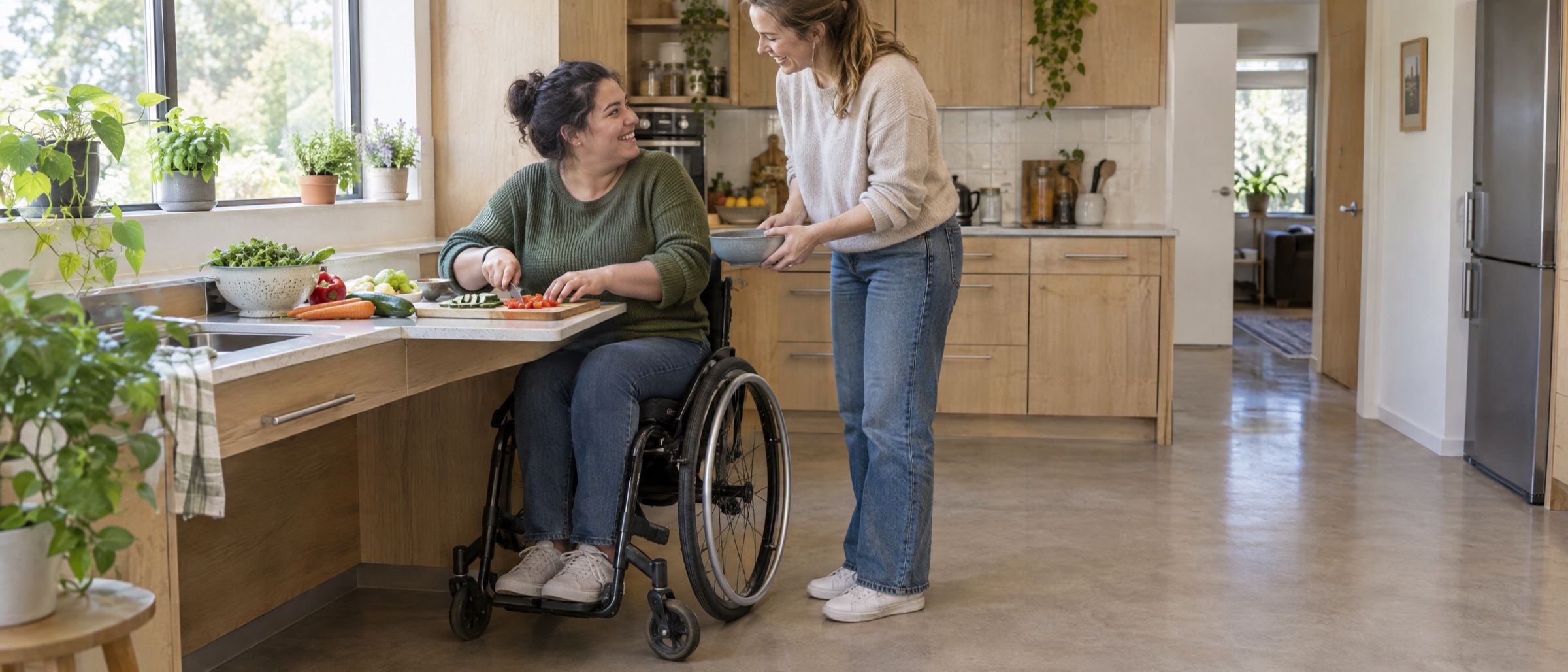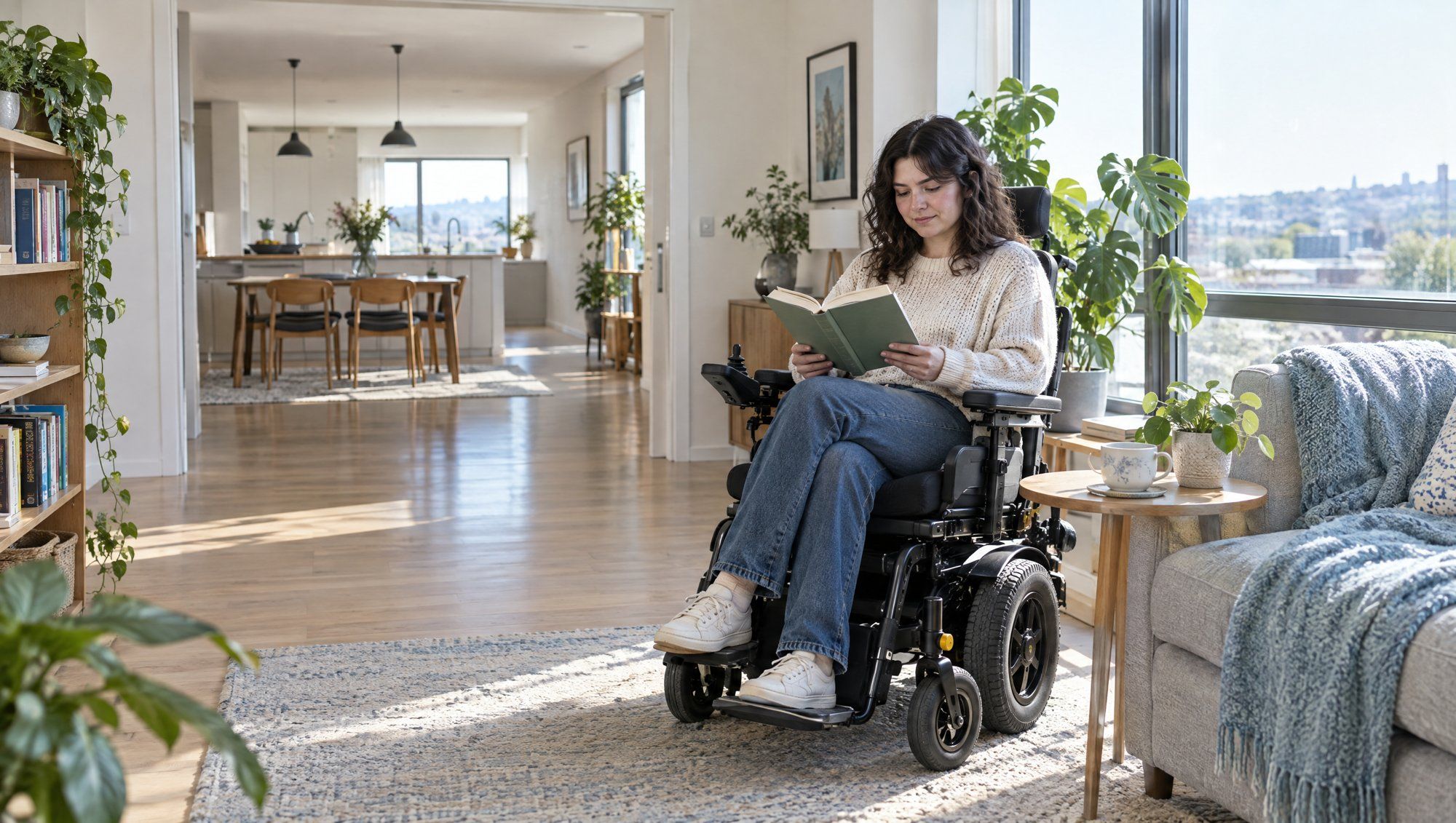
High physical support, usually shortened to HPS, is the most specialised of the four Specialist Disability Accommodation (SDA) design categories. It is built for people who use a wheelchair or need help with transfers, and who need very high levels of support every day.
Every home Manora Living currently lists is a high physical support home, so this is the question we are asked most. This guide explains what HPS means, what the SDA Design Standard requires, and what to look for when you visit.
What high physical support means
The SDA Design Standard defines HPS as housing designed to incorporate a high level of physical access provision for people with significant physical impairment and requiring very high levels of support.
The NDIA’s guideline gives practical examples of why someone might need it: a ceiling hoist, a backup power supply, or home automation and communication technology.
It sits alongside three other design categories:
| Design category | Built for |
|---|---|
| Improved liveability | People with sensory, intellectual or cognitive impairment, with a reasonable level of physical access |
| Robust | People who may have complex behaviours, with very durable design and a reasonable level of physical access |
| Fully accessible | People with significant physical impairment, with a high level of physical access |
| High physical support | People with significant physical impairment who also need very high levels of support |
Read the full comparison in SDA design categories explained.
Who high physical support suits
HPS can suit people who, for example:
- use a power or manual wheelchair at home all the time
- need a hoist or support from one or two people to transfer
- rely on powered equipment, such as a ventilator, pressure care mattress or power wheelchair, that must keep working in a blackout
- need to call for support when no one is in the room
The NDIA decides your design category from your individual needs, using reports from allied health professionals, usually an occupational therapist. It also thinks about whether your needs are likely to change soon, for example with a progressive condition. If you are not sure whether HPS is right, start with our guide to SDA eligibility.
What the SDA Design Standard requires in an HPS home
New SDA homes enrolled from 1 July 2021 must be certified against the SDA Design Standard by an independent accredited SDA assessor. HPS homes meet the fully accessible requirements, plus extra features for very high support needs.
Features shared with fully accessible homes
- Step-free entry from the street and from your parking space
- A covered landing at the front door of at least 1,500 mm by 1,500 mm, larger where door circulation needs it
- A parking space for your use, if provided, of at least 3,800 mm by 5,400 mm with a roof
- Bedrooms sized for a queen bed with 1,540 mm of clear space on the transfer side and 1,000 mm on the other two sides
- Clear space inside the bedroom door of at least 1,540 mm by 1,450 mm
- Reverse cycle air conditioning in living areas and bedrooms, with controls you can reach from a seated position
Features required for high physical support
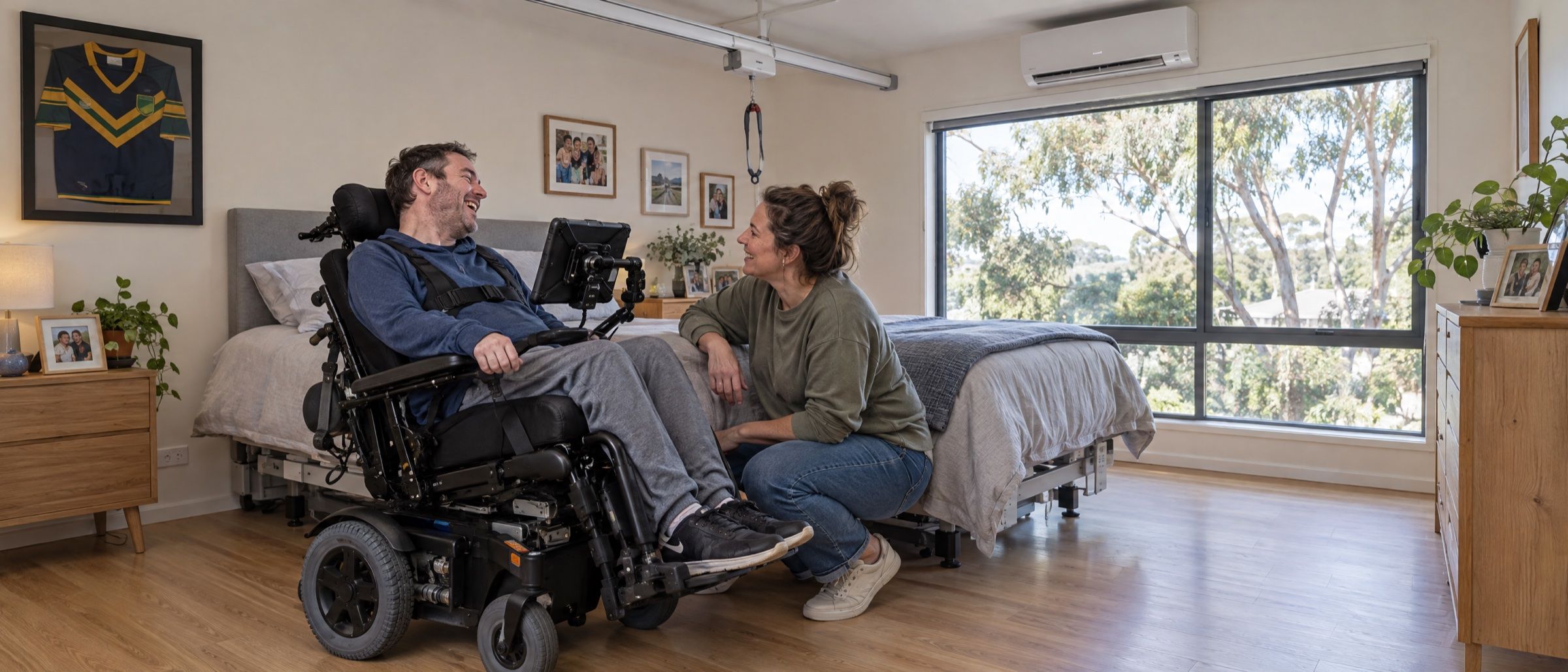
- Ceiling hoist provision. Bedrooms must have power and built-in structure for a constant-charge ceiling hoist that can travel across and down the bed, rated to at least 250 kg. A structural engineer must certify it. The Standard recommends the same in bathrooms.
- Emergency power. A backup power solution must cover an outage of at least two hours for at least two double power points in each participant bedroom, and any automated doors used to get in or out.
- A way to reach your supports. A video, intercom or other communication system must let you contact your supports when they are out of sight.
- Reliable internet. Stable, high-speed internet with wi-fi throughout the home.
Features that are recommended, not required
The Standard’s best practice appendix also recommends, for fully accessible and HPS homes:
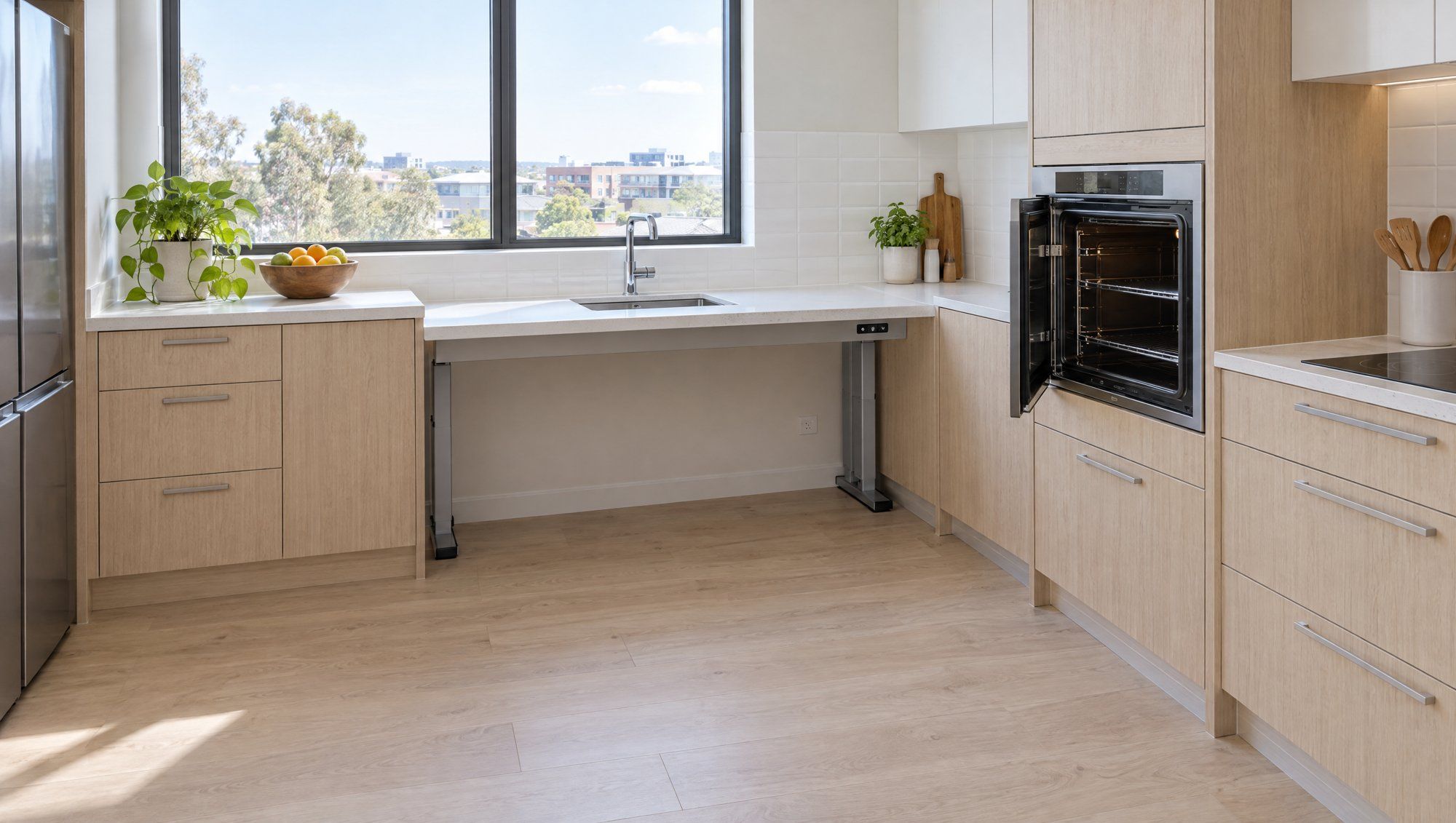
- a height-adjustable kitchen bench, cooktop and shallow sink
- a height-adjustable bathroom basin
- window sills no higher than 600 mm so you can see out from bed or a wheelchair
- space and charging points for overnight wheelchair storage
- 1,540 mm of clear space on all three sides of the bed
These are signs that a provider has gone beyond the minimum. Ask about each one when you visit.
Ceiling hoist ready is not the same as a hoist
A common surprise: HPS homes must be ready for a ceiling hoist, but the hoist itself may not be installed. Hoists are often assistive technology funded in your plan. When you look at a home, ask:
- Is a hoist track installed, or only the structure and power?
- Does the track run to the bathroom as well as the bedroom?
- Who services it, and how often?
Overnight support and OOA
Many HPS homes include onsite overnight assistance (OOA): a room where a support worker can stay overnight, close to the people they support. OOA is part of the home, not the support itself. Your overnight support is still funded in your plan, often through Supported Independent Living (SIL). Our guide to SDA vs SIL explains how the two fit together.
Questions to ask when you visit an HPS home
- Is the home enrolled with the NDIA as high physical support, and for which building type?
- What does the emergency power cover, and for how long?
- How do I call for support at night?
- Is there a hoist installed, or only provision for one?
- What does the bathroom look like for a shower trolley or commode chair?
- Is there OOA, and who uses it?
- What is my rent contribution, and is it in writing?
- Can I choose my own support provider?
Manora Living’s high physical support homes
All of our current homes are high physical support SDA with onsite overnight assistance:
- Blacktown: one-bedroom apartments a short walk from Blacktown station and hospital
- Merrylands: one, two and three-bedroom apartments with a rooftop terrace
- Granville: four self-contained one-bedroom villas, each with a private courtyard
- Wollongong: one-bedroom apartments in a modern building
- Noraville: two five-bedroom houses on the Central Coast
Each listing shows its features, accessibility details and photos. Ask us about availability, or support coordinators can refer a participant.
Common questions
What is high physical support SDA?
It is one of the four SDA design categories. The SDA Design Standard describes it as housing with a high level of physical access for people with significant physical impairment who need very high levels of support.
What is the difference between fully accessible and high physical support SDA?
Both have a high level of physical access, with wide doorways, step-free entry and larger bedrooms and bathrooms. High physical support adds features for very high support needs, including structural and power provision for a ceiling hoist in bedrooms, emergency power for at least two hours, and a communication system between you and your supports.
Does a high physical support home come with a ceiling hoist installed?
Not always. The SDA Design Standard requires the structure and power to be ready for a ceiling hoist rated to at least 250 kg. The hoist itself is usually assistive technology funded separately in your plan. Ask each provider what is installed.
Can I live in a high physical support home if my plan says fully accessible?
The NDIA only funds the category in your plan. Some providers may let you live in a higher-value category if you pay extra rent, and that must be agreed in writing. If your needs have changed, talk to your support coordinator about a plan reassessment.
What is OOA in high physical support SDA?
OOA stands for onsite overnight assistance. It is a room in or near the home where a support worker can stay overnight, so support is close by. Many high physical support homes include it.
Sources
- NDIS Specialist Disability Accommodation Design Standard, Edition 1.1 (25 October 2019)
- NDIA, Our Guidelines: Specialist disability accommodation
Facts checked against these sources on . NDIS rules change, so check your plan and the NDIA's current guidance before you decide.
Homes with vacancies